Loading...
BlogCompliance
The NYC Bin Rule: Fines Start September 8, 2026
The official NYC Bin rule hits full enforcement September 8, 2026. Who must comply, the $50–$200 fines, and the reimbursement worth claiming first.
By Brandon Babel6 min read
In This Article
The official NYC Bin rule reaches full enforcement on September 8, 2026 — from that Tuesday on, DSNY can ticket any covered building that sets out trash in anything other than the city's own bin. The requirement has technically been live since June 1, but the agency spent the summer issuing warnings instead of summonses. That grace period ends the day after Labor Day, and for most small buildings the fix costs about $50, once.
1. Who the NYC Bin Rule Covers
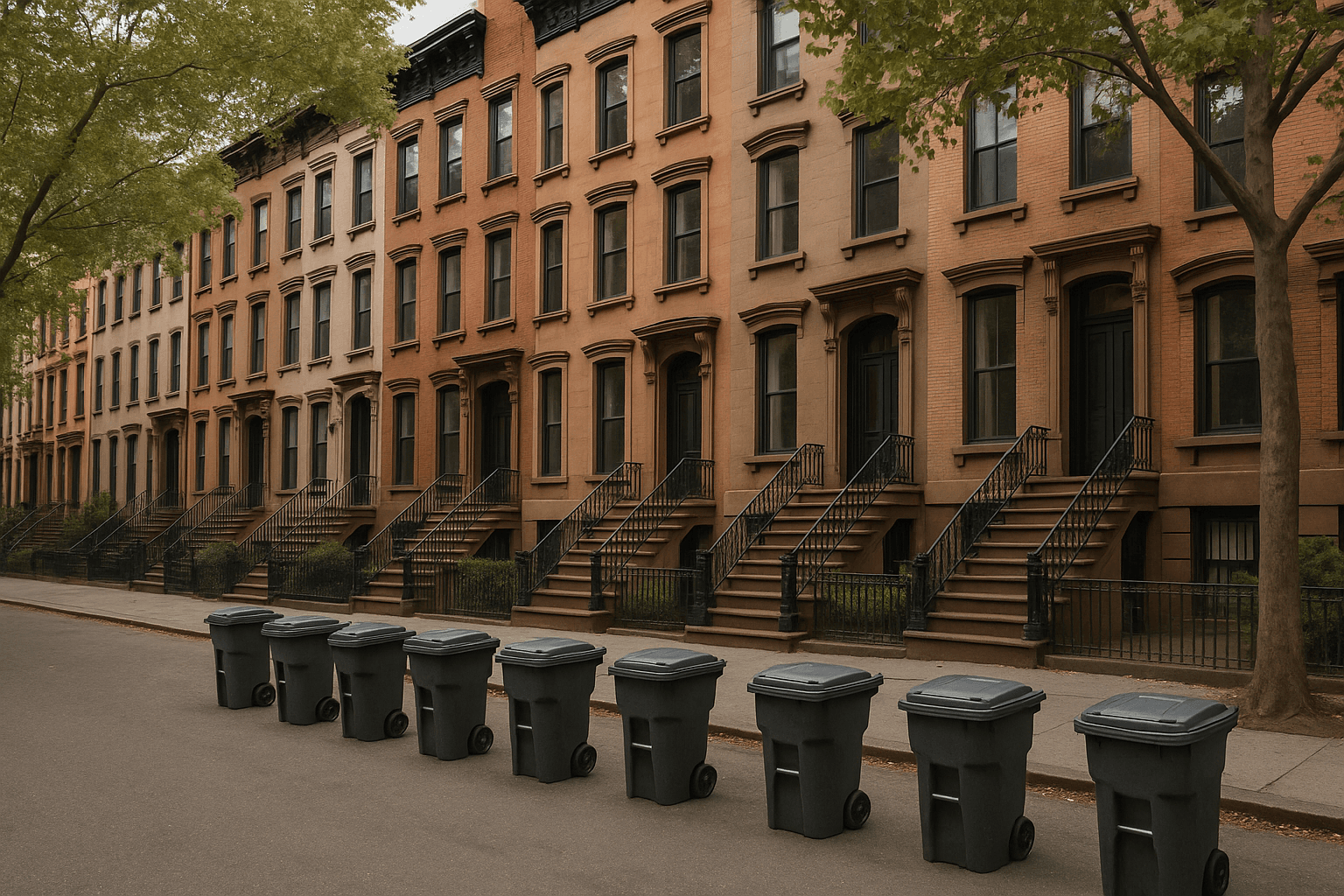
The rule reaches nearly every small residential property in the city. Per DSNY's residential containerization page, every property with 1–9 residential units must now set out trash in an official NYC Bin.
A set of special-use buildings is covered too: houses of worship, nonprofits, City agencies, and professional offices located inside residential buildings, so long as they receive DSNY collection. In practice that means the typical brownstone, rowhouse, and small walk-up — the core of most small owners' holdings — is squarely inside the rule.
Buildings with 10 or more units are on a separate containerization track, covered in section 7. If you own both sizes, you are managing two different sets of obligations this fall.
2. June 1 Set the Rule — September 8 Gives It Teeth
This deadline did not appear overnight; it is the last step in a phase-in that started almost two years ago. The dates that matter:
| Date | What changed |
|---|---|
| November 12, 2024 | All 1–9 unit properties must use a lidded bin of 55 gallons or less for trash |
| June 1, 2026 | The bin must be an official NYC Bin; warning period begins |
| September 7, 2026 | Warning period ends (Labor Day) |
| September 8, 2026 | Full enforcement begins — summonses and fines; also the deadline to request the DOF bin reimbursement |
DSNY confirmed the enforcement date in its August announcement on the September 8 deadline: starting September 8, sanitation agents will issue summonses to covered properties that set out trash in anything other than the official bin. Generic 55-gallon lidded bins, compliant since 2024, stop being acceptable for trash that same day.
3. What a Violation Costs
The fine ladder is modest per ticket and expensive per season. Under the containerization rules published through NYC311's residential waste containerization page, summonses run $50 for a first offense, $100 for a second, and $200 for a third and each one after that.
Trash goes out at every collection, which means a non-compliant building is not risking one fine — it is risking a recurring one. Two collections a week through the fall adds up quickly at $200 a summons.
The arithmetic on the NYC Bin rule is unlike most city compliance: the required bin costs about $50, which is exactly the price of the first ticket for not having it. After September 8, a small-building owner who skips the switch is effectively buying the bin over and over — $50, then $100, then $200 per summons — and still ends the season without one.
4. What Counts as an Official NYC Bin
Only the city's branded bin qualifies for trash. Per DSNY's NYC Bins page, official bins cost about $50 for the most common size, come in multiple sizes, and are built rat-resistant and compatible with the mechanized arms on DSNY's collection trucks.
Where to get one on short notice:
- Home Depot — every NYC location stocks the official trash bin
- Delivery apps — DoorDash, Instacart, and Uber Eats all deliver them
- Online — through the city's bin-purchase site linked from the DSNY page above
One useful carve-out: the official bin is mandatory for trash only. Recycling and compost can stay in any labeled bin of 55 gallons or less with a secure lid, which is exactly what your retired trash bins are.
5. Claim the Reimbursement Before September 8
The city will pay eligible owners back for one bin, but the window closes the same day enforcement starts. The Department of Finance's Trash Bin Reimbursement Program covers the cost of one official 45-gallon container for owners of one- and two-family homes who received the STAR property tax exemption or credit in 2024 or 2025.
Requests must be in by September 8, 2026. You will need the voucher number from the letter DOF mailed you, plus proof of purchase — a receipt, a bank statement, or even a photo of the bin.
If you own a qualifying two-family and have not filed, this is a week-one task, not a someday task. The reimbursement turns a mandatory purchase into a net-zero one.
6. Setout Times Still Apply on Top of the Bin Rule
The bin rule changes what trash goes out in, not when it goes out. Receptacles with tight-fitting lids can be set out from 6:00 PM the night before collection, and empty bins must come back in by 9:00 PM on collection day — the baseline schedule we detailed in our guide to DSNY's setout time rules.
Since loose bags are no longer an option for trash at covered buildings, the 6:00 PM receptacle schedule is now effectively your building's schedule. Worth a note to tenants and supers who were used to the 8:00 PM bag drop.
7. Bigger Buildings Are Next: Empire Bins
DSNY's containerization plan does not stop at 9 units. Per the agency's residential containerization page, buildings with 10–30 units will choose between official NYC Bins and Empire Bins — the European-style stationary on-street containers — while buildings with 31+ units will be assigned Empire Bins, unlocked by key card and serviced by automated side-loading trucks.
Empire Bins are live in Manhattan Community District 9 today, expand to Brooklyn Community District 2 this fall, and are planned citywide by 2032. Owners of 10–25 unit buildings are not being ticketed under the September 8 rule, but the assignment letters and district rollouts are coming — this is a program to track, not ignore.
8. A Before-September-8 Checklist
Run this pass during the first week of September and the deadline becomes a non-event:
- Count units per property. 1–9 residential units means the official bin is mandatory now.
- Buy enough bin capacity for the trash your building generates between collections — multiple official bins are fine.
- File the DOF reimbursement by September 8 if the property is a STAR-eligible one- or two-family home.
- Repurpose the old bins for recycling or compost, where they remain compliant.
- Brief tenants and your super on the official-bin requirement and the 6:00 PM setout time.
- Stack it with the season's other filing — HPD's property registration deadline lands September 1, making this a two-deadline week for small owners.
- Add the rule to your building's compliance calendar so the Empire Bin phase doesn't arrive as a surprise either.
Most NYC compliance failures happen in private — a missed filing, an expired inspection sitting in a database. The bin rule is different: after September 8, every collection day is a public, curbside inspection of whether your building complied. Fifty dollars and a trip to Home Depot before then closes it out for good.
About the Author
Brandon Babel is the Founder and CEO of Ora Property Management, serving condo and co-op boards and rental owners across Manhattan and Brooklyn. He founded Ora to bring transparent, communication-first management to small and mid-sized buildings, drawing on years across the financial, operational, and ownership sides of New York real estate.
Learn more about Ora · Connect on LinkedIn · Contact Brandon
Continue Reading


Have a Question About Your Property?
We’re always happy to talk — no commitment required.