Loading...
BlogCompliance
Local Law 151: NYC Steam Radiator Inspections, Explained
Local Law 151 requires steam radiator inspections in NYC buildings where kids under 6 live, and heat season starts October 1. Dates, forms, and fines.
By Brandon Babel10 min read
In This Article
Local Law 151 steam radiator inspections are the newest line on a NYC small-building owner's compliance list, and the timing matters. Heat season starts October 1, steam comes back into every riser in the city, and the law that now governs those radiators has been enforceable since May. If you own a building with 3 or more units and a steam boiler, here is what changed and what to do about it.
What Local Law 151 Requires
Local Law 151 of 2025, known as Ben Z's Law, passed the City Council on October 9, 2025 and became law that November without the mayor's signature. HPD announced that enforcement of Local Law 151 began May 9, 2026. The full text is posted as Local Law 151 of 2025 on HPD's site.
The core rule is short. Owners of multiple dwellings with steam heating must have every steam radiator inspected at least once every two years in each apartment where a child under the age of 6 lives, and in the building's common areas. The inspection checks each component of the radiator for safe operating condition and looks for leaking water, browning floors or walls, corrosion, and any other sign of water damage.
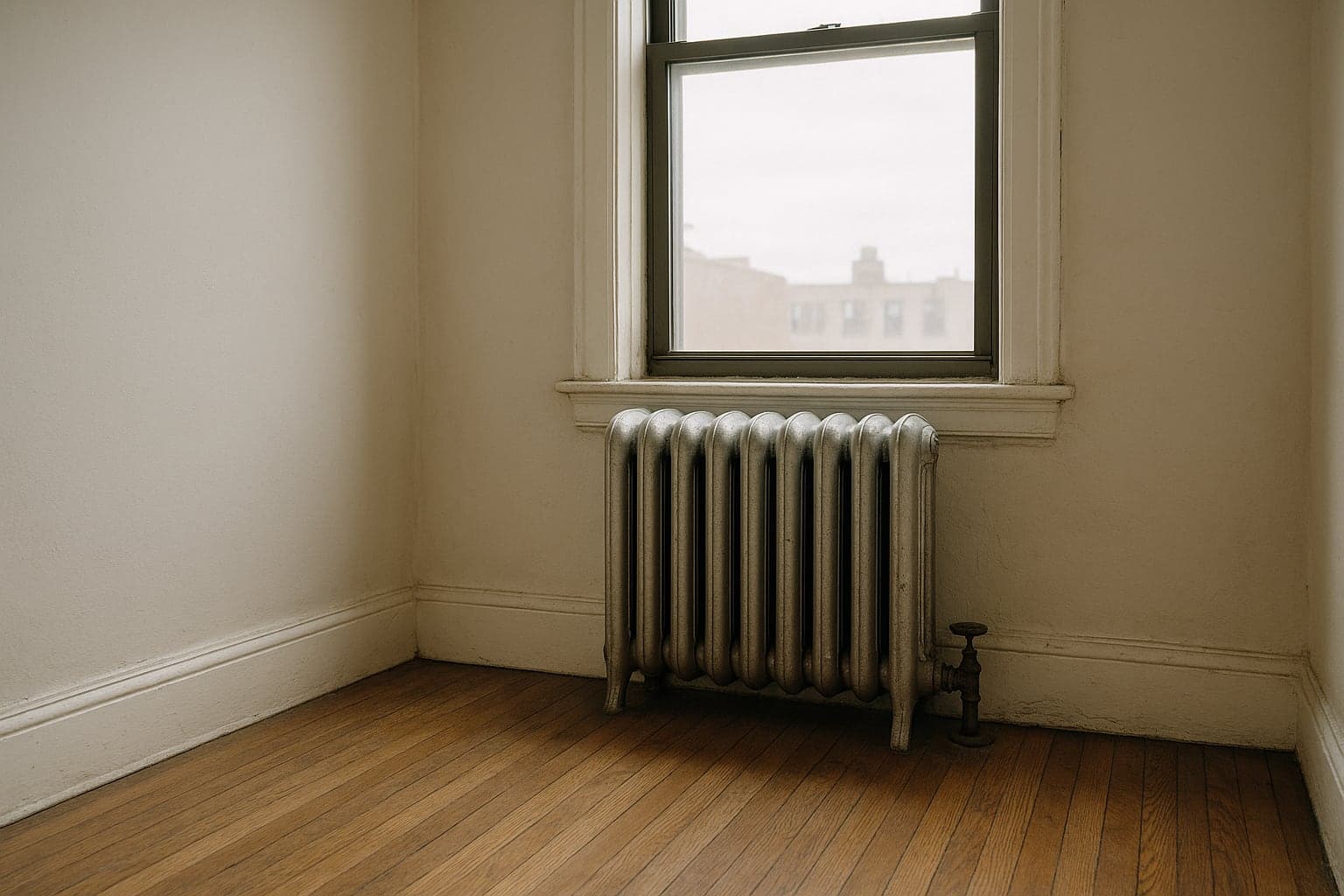
The reason is physical. HPD notes that a steam radiator can reach 220°F, and a failed valve or a cracked section can release live steam into a bedroom. The law is named for a toddler who died that way.
Which Buildings and Apartments Are Covered
HPD's steam radiator inspection page draws the line at buildings with 3 or more residential units that have a steam heating system. Inside those buildings, a covered apartment is one with at least one steam radiator where a child under 6 resides. Common areas are covered whenever the building has at least one covered apartment.
A few practical readings for small owners:
- A 4-unit building with hot-water baseboard heat is outside the law. A 6-unit building with one-pipe steam and one family with a toddler is inside it.
- A building with no young children today still has obligations. The annual notice cycle in section 4 runs every January whether or not anyone answered yes last year.
- Co-op and condo units occupied by the shareholder or unit owner of record are exempt, and existing agreements that split responsibility between a co-op and a shareholder, or a condo board and a unit owner, stay in force.
If you are not sure whether a building runs steam or hot water, look at the radiators. Steam radiators have an air vent on one end and, in a one-pipe system, a single supply valve at the floor. Hot-water radiators and baseboards have two connections and no vent that hisses.
Who Can Perform the Inspection
The law does not require an engineer for every visit. The qualified-inspector list in the text and on HPD's page includes:
- A licensed master plumber
- A licensed high-pressure boiler operating engineer or stationary engineer
- A licensed oil burning equipment installer
- A mechanical contractor
- Anyone working under the direct and continuing supervision of one of the above
- A building superintendent who has reviewed HPD's Steam Radiator Inspection Training Manual and signed a certification with the owner
For a walk-up with a part-time super, the last option is the realistic one. The catch is documentation: the owner must keep a self-certification stating that the super reviewed HPD's materials, and the inspector must complete HPD's Record of Steam Radiator Inspection form for each unit and common area.
If your heating contractor already services the boiler each fall, ask them to add the radiator inspection to the same visit. A plumber or mechanical contractor who is already in the building is the lowest-cost qualified inspector you will find.
The January Notice Cycle: Dates That Repeat Every Year
Local Law 151 borrows its machinery from the lead paint law. Each January the owner must ask every household whether a child under 6 lives there, tenants must answer, and the owner must tell HPD about the silent ones. The first cycle runs in January 2027.
| Date | What happens | Who acts |
|---|---|---|
| January 1–16 | Annual notice asking whether a child under 6 lives in the unit goes to every apartment not inspected in the prior calendar year, in English and Spanish, by first-class mail, hand delivery, or with the January rent bill | Owner |
| February 15 | Written response due back to the owner | Tenant |
| March 1 | Tenant No Response Form filed with HPD for any unit that did not answer and where the owner has no actual knowledge either way | Owner |
| At least every 2 years | Inspection of all steam radiators in covered apartments and common areas by a qualified inspector | Owner |
| Every lease | A conspicuous notice of the owner's inspection obligation in every lease offered in a covered building | Owner |
Two details save time. First, the law says a notice given under the lead paint annual-notice rule satisfies this requirement, and HPD's form is titled "Annual Notice for Inspection of Steam Radiators – Inquiry Regarding A Child" for that reason. If you already run the January lead paint mailing described in our guide to HPD lead paint audits, you are adding a form, not a process.
Second, English and Spanish are the required languages, and HPD publishes the notice in nine more. Keep the mailing log and the returned forms in the same file as the lead paint records. HPD reads them together.
Defects and Hazards: The 48-Hour, 24-Hour, 7-Day, 14-Day Clock
The inspection creates deadlines the moment it finds something. The law sets them in hours and days, not "promptly":
- Defect or damage found: the inspector must notify the tenant, the owner, and HPD within 48 hours, and the owner must correct it within 14 days of the inspection.
- Condition likely to be hazardous to life or safety: the owner must take the radiator out of service within 24 hours and repair or replace it within 7 days of the inspection.
That 24-hour clock is where a steam law collides with the heat law. Taking a radiator offline in January does not suspend the requirement to keep that apartment at 68°F during the day, so a hazardous finding means a plumber and a temporary heat plan on the same call. HPD's press release adds that Class C conditions can be routed through its emergency repair program, which means the city does the work and bills the owner.
A visible leak, a browning floorboard, or a corroded valve is exactly what the inspector is instructed to flag. Fixing those while the system is cold, before October 1, is far cheaper than fixing them under a 7-day order in February.
Penalties, and Why the Heat Law Is the Bigger Number
Local Law 151's own penalties are modest. An owner who fails to present the January notice faces a civil penalty of up to $500, and an owner who fails to keep the inspection records faces another $500. HPD also inspects in response to complaints, and a radiator hazard found that way lands on the building record as a violation like any other.
The larger exposure runs through the heat rules that switch on the same week. HPD's heat and hot water requirements and its penalty schedule set the numbers:
| Requirement | Standard | Penalty if violated |
|---|---|---|
| Daytime heat, 6:00 AM–10:00 PM | At least 68°F inside when it is below 55°F outside | $350–$1,250 per day, first violation |
| Nighttime heat, 10:00 PM–6:00 AM | At least 62°F inside, regardless of outdoor temperature | $500–$1,500 per day, subsequent violations |
| Hot water, all year | At least 120°F at the tap | Same schedule |
| Repeat inspections | Third or later heat violation in one season | $200 inspection fee each |
For a small steam-heated building, Local Law 151 is mostly a paperwork law with a safety law inside it. The notice and record penalties top out at $500, but a radiator pulled from service in January still leaves the owner responsible for 68°F in that apartment, at $350 to $1,250 a day if the room goes cold. The owners who get through the first inspection cycle cleanly will be the ones who checked their radiators while the steam was off, not the ones who called a plumber after a February hazard notice.
The year-round hot water rule and the summer enforcement pattern are covered in our post on HPD heat and hot water violations. The point here is narrower: a radiator problem in heat season is never just a radiator problem.
An Owner's Checklist Before October 1 and Before January 1
The list below fits on one page. Work the first half this week and the second half before the holidays.
Before the steam comes on:
- Confirm which of your buildings run steam, and count the radiators in each apartment and in every hallway, lobby, and stairwell.
- Walk each unit with steam and look for what the inspector will look for: leaks, stained floors, corroded valves, missing or broken air vents.
- List the apartments where you already know a child under 6 lives. Actual knowledge triggers the inspection duty now, not after the January mailing.
- Pick your inspector. If it is your super, have them read HPD's training manual and sign the certification before they touch a radiator.
- Add the required lease notice to every new lease and renewal going out this fall.
Before January 1:
- Print HPD's annual notice in English and Spanish and set the mailing for the first two weeks of January, alongside the lead paint notice.
- Calendar February 15 for responses and March 1 for the Tenant No Response Form.
- Open a records file with the eight items the law requires per inspection: address, unit and radiator location, inspector's name and address, license number, the super's self-certification if applicable, inspection date, results by component, and any remediation.
- Slot the inspection itself. The two-year clock is generous, but the practical window is when a plumber is already in the building.
Every item above also belongs on the broader list in our NYC compliance checklist for small building owners. If an inspection or a complaint turns into an HPD violation, the correction and certification steps are in our 7-step guide to HPD violations. The legislative history, including the Council's 38 co-sponsors, is on the Int 0925-2024 record.
Local Law 151 asks small owners for a January mailing, a records file, and a radiator check every two years, and it asks for them in buildings where a child sleeps a few feet from 220°F iron. The penalties for skipping the paperwork are small. The cost of a radiator failure in a covered apartment is not, and heat season is when it happens.
About the Author
Brandon Babel is the Founder and CEO of Ora Property Management, serving condo and co-op boards and rental owners across Manhattan and Brooklyn. He founded Ora to bring transparent, communication-first management to small and mid-sized buildings, drawing on years across the financial, operational, and ownership sides of New York real estate.
Learn more about Ora · Connect on LinkedIn · Contact Brandon
Continue Reading

Have a Question About Your Property?
We’re always happy to talk — no commitment required.